
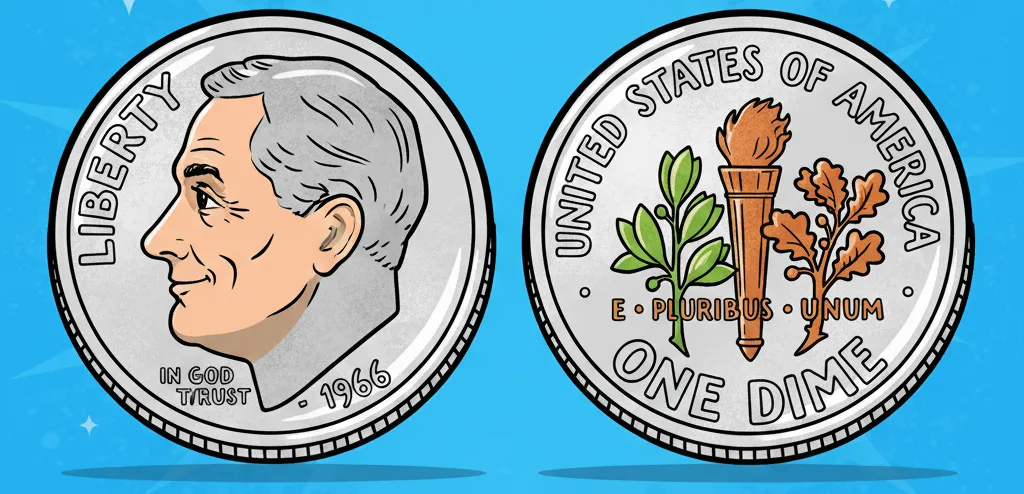



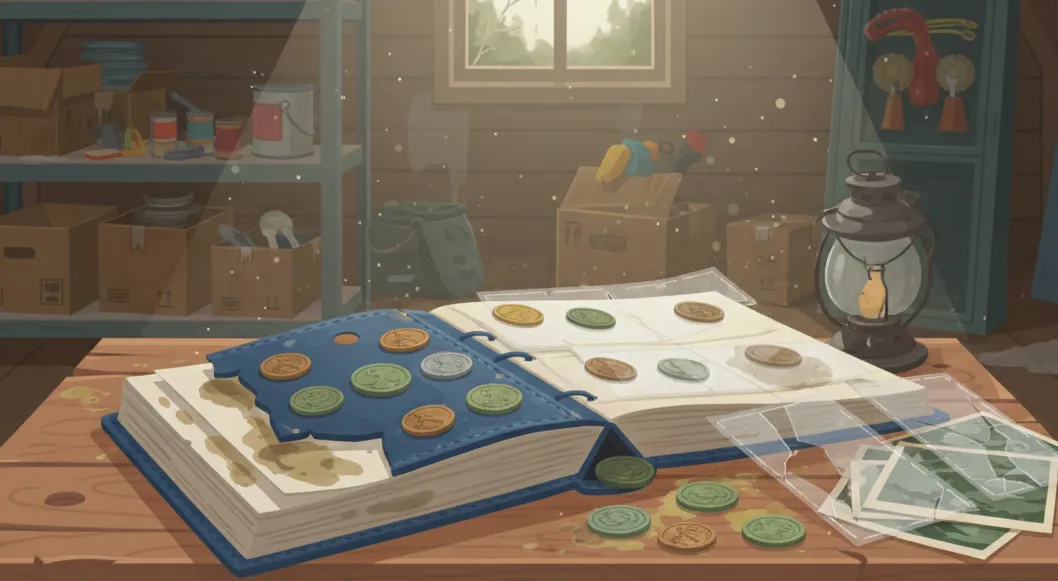
Getting new coin accessories can cost a lot of money, having a big coin collection, so knowing how to do coin value lookup, fix and mend old albums and capsules yourself greatly helps you save cash.
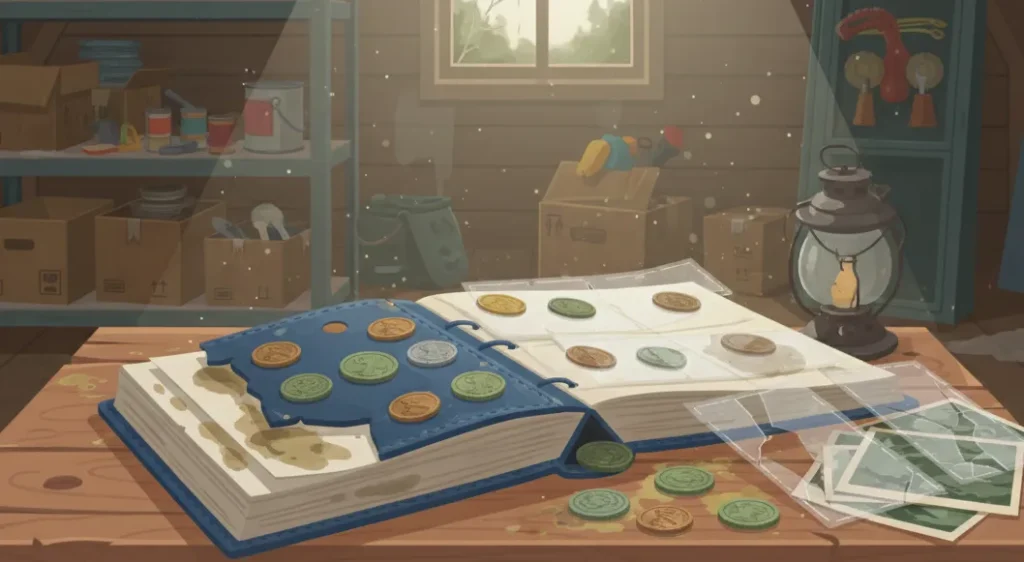
You must remember this rule: doing all repair work needs strict following of safety rules, avoiding damage to the actual coins inside the holder.
Album and Sheet Repair
Coin collecting albums often get damaged from being used too much and from wet air, causing wear. You can fix torn pages and covers yourself, using simple repair items found easily.
Repairing PVC Sheets
Sheets used for holding coins often rip where the pockets are, causing problems. You cannot allow the coin to move freely inside the sheet, moving around, causing scratches on its surface, which lowers its worth.
- You must take a thin, clear tape that has no acid in its makeup, ensuring safety. This type of tape won’t ruin the coins as time passes, keeping the metal good.
Normal office tape doesn’t work here, turning yellow and letting out chemicals bad for the metal, needing a safe product.
- You need to carefully stick the clear tape under the ripped edge of the pocket from both the front and back, making the tape overlap just a little bit, securing the tear.
After sticking the tape, you must check that the tape sits flat and doesn’t leave behind any sticky marks, finishing the fix. It is better to use small pieces of tape, avoiding one long piece, having a better result.
Replacing Rings in Albums
Old albums having rings often show bent or broken rings, making the pages hard to turn or close correctly, creating a bad experience.
In this case, you can replace the whole ring part, fixing the main problem.
To do this, you need to take apart the old album cover, removing the broken metal part, which part usually held in place with metal pins.
You can get a new ring part at stores selling craft items or office supplies, easily finding a replacement.
You must fasten the new ring part to the cover using flat-head bolts, using those bolts instead of the pins, securing the piece.
It is needed that the bolt heads sit flat and don’t stick out at all, helping the cover close smoothly.
If the album cover is made of cloth, you can make the attachment spots stronger, using extra cloth or a piece of leather on the inside, adding strength.
Cover Restoration
The album cover, being either real leather or fake leather, can start cracking or wearing thin at the edges, needing fixing.
For fixing small cracks on fake leather, you can use a special liquid for leather repair, which liquid sold in small tubes, applying a minimal amount.
You must put a thin coat of this liquid on the crack and let the area fully dry, setting the patch.
If the album cover looks worn at the corners, you can add small metal corners, making the album stronger.
You can easily find these metal corners in supply stores and read all the details on them in the best coin identifier app; those pieces make the album look much better and neater.
Capsule Repair
Plastic capsules offer the best protection for your costly coins, guarding them fully.
When a capsule shows a crack or fails to close tightly, the coin loses all its safety, becoming exposed to air.
Removing Scratches on the Capsule
Clear plastic capsules often get scratches, making it harder to clearly see the coin inside, and they need cleaning.
- You must use a soft cloth, using microfiber for this, and a special paste made for polishing plastic, gently working it in.
- You need to put the polish paste on the cloth, rubbing the scratched area with very soft, circular movements, preventing more damage.
- You cannot push down hard because pushing too hard can easily cause new scratches to appear on the plastic.
After polishing, you must clean the capsule with a soft, clean cloth. This method only works for scratches that aren’t deep, and it fails to fix serious cracks.
Restoring the Capsule Seal
Having a tight seal on the capsule is needed, guarding the coin from wet air and outside air, keeping it safe.
If the capsule comes in two halves and isn’t closing tightly, you can use a thin layer of clear nail polish or a special plastic glue, applying a minimal amount to the edge.
- You must put the glue on the inner edge of one capsule half, not using too much, preventing it from dripping onto the coin itself.
After putting the glue on, you must quickly close the capsule, letting it sit in that closed position for several hours, ensuring a strong bond.
This way seals the capsule well, but you must know that opening it after this will be hard, making sure the coin is placed perfectly before closing it.
Fixing a Cracked Capsule
When a capsule shows a crack, its air-tight seal is completely broken, needing a permanent fix.
If a new capsule isn’t available, you can slow the crack from spreading for a short time, giving you time to find a replacement.
To do this, you must use a thin drill bit or a needle, drilling a small hole right at the end of the crack, stopping the line from growing. This hole helps to take away the stress on the plastic, preventing the crack from going further.
You can then cover the crack with a thin coat of clear epoxy glue, that glue filling the small opening. This stands as only a temporary fix, requiring you to move the coin to a whole capsule as soon as possible.
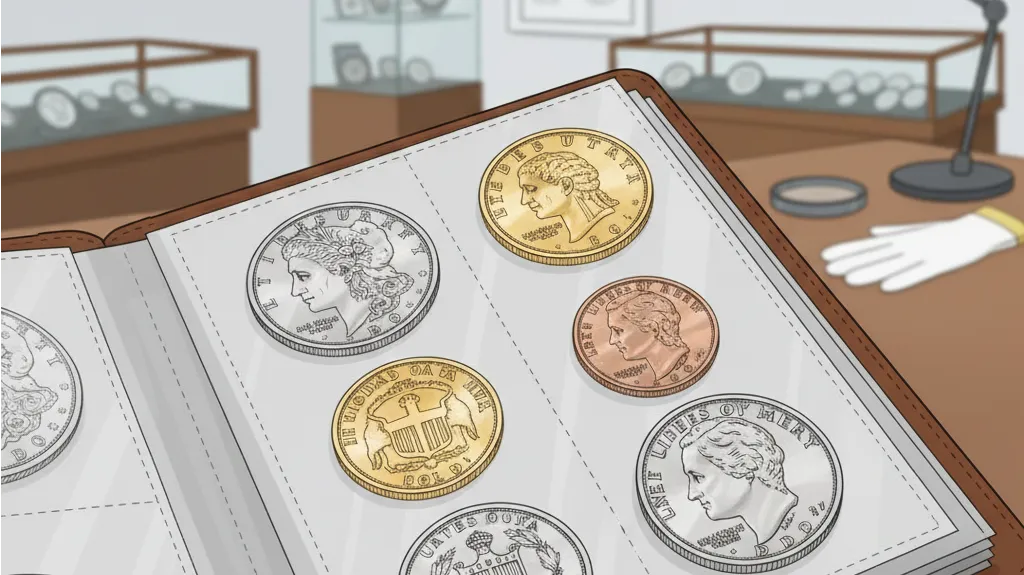
Fighting Mold and Odors
Old albums and the pages inside them, storing them in wet places, often start to have a bad smell or show mold growing on them, needing cleaning.
Removing Mold from Paper Sheets
Mold presents a danger, having the ability to move onto the coins and cause metal damage, being very bad for the metal, and reducing the value — if so, you can check it via a coin app for Android to know for sure.
You must first take all the coins out of the album fully, placing them aside.
Then you need to wipe the paper sheets having the mold with a soft, dry cloth, removing the mold that sits on the surface.
To take away mold that is deeper inside, you can use a cleaning liquid made with alcohol, putting that liquid on a cotton ball, and wiping carefully.
You must not use water; it only helps the mold grow quicker, making the problem worse.
After cleaning, you must let the pages dry fully in open air, avoiding placing them in direct sunlight, ensuring complete dryness.
Removing Bad Odor
A bad smell often coming from albums is usually left over from old chemicals or mold, needing to be fixed.
- You must put the empty album into a large plastic bag or container, sealing it off. You should put several small packets of silica gel inside, that gel working well to pull out wetness from the air.
- You can also place an open box of baking soda or ground coffee inside, as those products are known for taking in bad smells.
- You must close the bag or container tightly, letting it sit for several days, giving time for the smells to go away.
After this time, you must let the album air out for a while, removing the smell.
Making Capsule Inserts Yourself
Sometimes a coin doesn’t sit tightly inside the capsule, causing it to move and get scratches on its face. To fix this problem, you can make small inserts yourself, ensuring a perfect fit.
- You must use a soft item, velvet paper, or thin cardboard that has no acid in it, as it is the best choice.
- You must cut a thin ring shape from this paper, that ring shapesitsg tightly around the coin, filling the space.
- The ring needs to be made slightly bigger than the coin’s size, ensuring a tight hold, not a loose one.
- The insert is placed inside the capsule, and then the coin goes inside the insert, completing the needed support.
- The insert must hold the coin safely in its place, stopping it from moving and getting scratched, preventing damage.
| Material | What to Use It For | Coin Safety |
| Acid-Free Tape | Repairing ripped PVC sheets | High |
| Regular Office Tape | Repairing ripped PVC sheets | Low |
| Acrylic Leather Patch | Fixing cracks on the album cover | High |
| Universal Super Glue | Fixing a cracked capsule | Low |
| Plastic Polish Paste | Taking away scratches on the capsule | Medium |
Conclusion
Fixing coin accessories yourself stands as a useful skill, letting you save money and making your coin collection last for a much longer time. The main rule you must follow: never use strong chemicals or regular office tape, because those things can ruin your coins forever, causing permanent damage.
Repairing ripped pages must be done only with tape that has no acid, ensuring the metal remains safe.
Capsules showing cracks must be moved quickly, though you can fill the crack for a short time, giving you time to find a new one.
Always store your albums in a dry place with air moving, stopping mold from starting.
A successful repair makes your whole collection look neater and keeps it well-protected.